CNA continuously invests in innovative, independent research projects that explore new tools and approaches for addressing emerging national safety and security challenges. These projects are showcased in the CNA Innovation Incubator (CNAi2). From analyzing machine learning for public safety to developing a Navy Force Design Lab, CNA's most creative thinkers are continuously working on new approaches to help government solve the nation's toughest problems. In our Meet the Innovator series, we interview the analysts behind CNAi2 projects about their work and their innovation process.
Q: Can you tell us about the Wildfire Threat Detection for Transportation Infrastructure project and what makes it innovative?
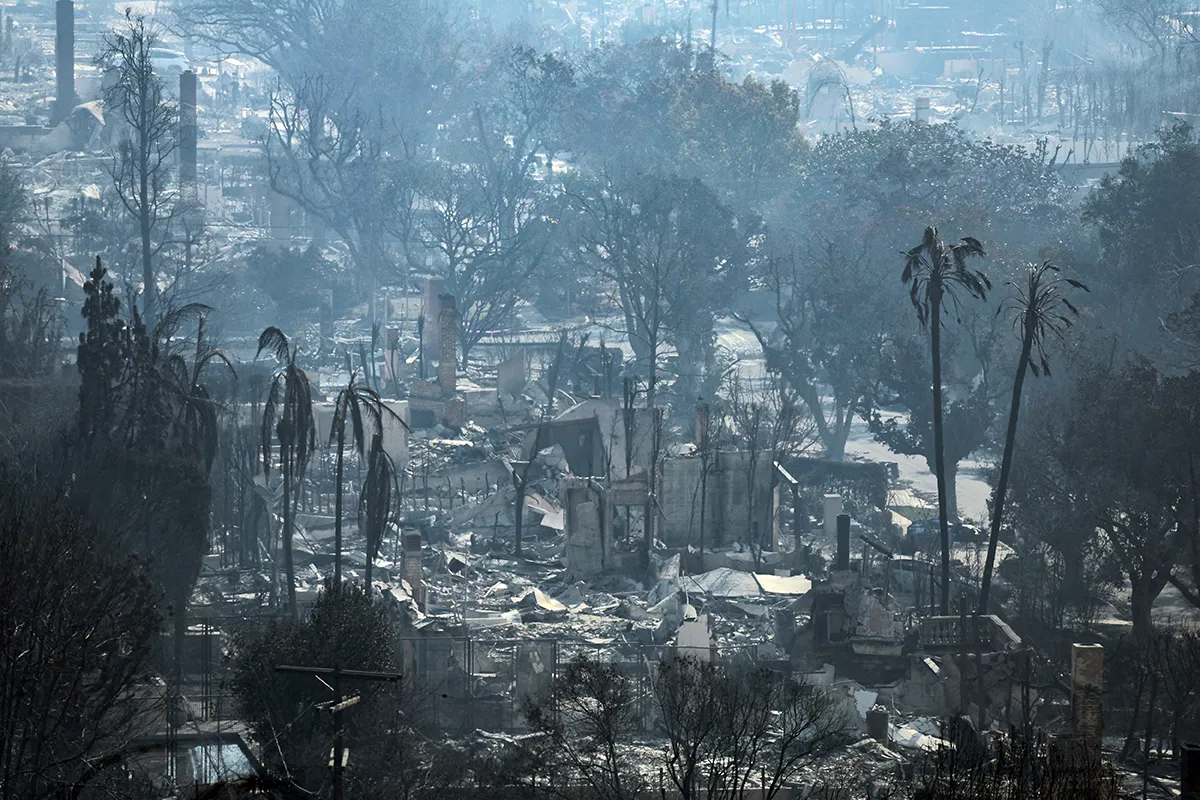
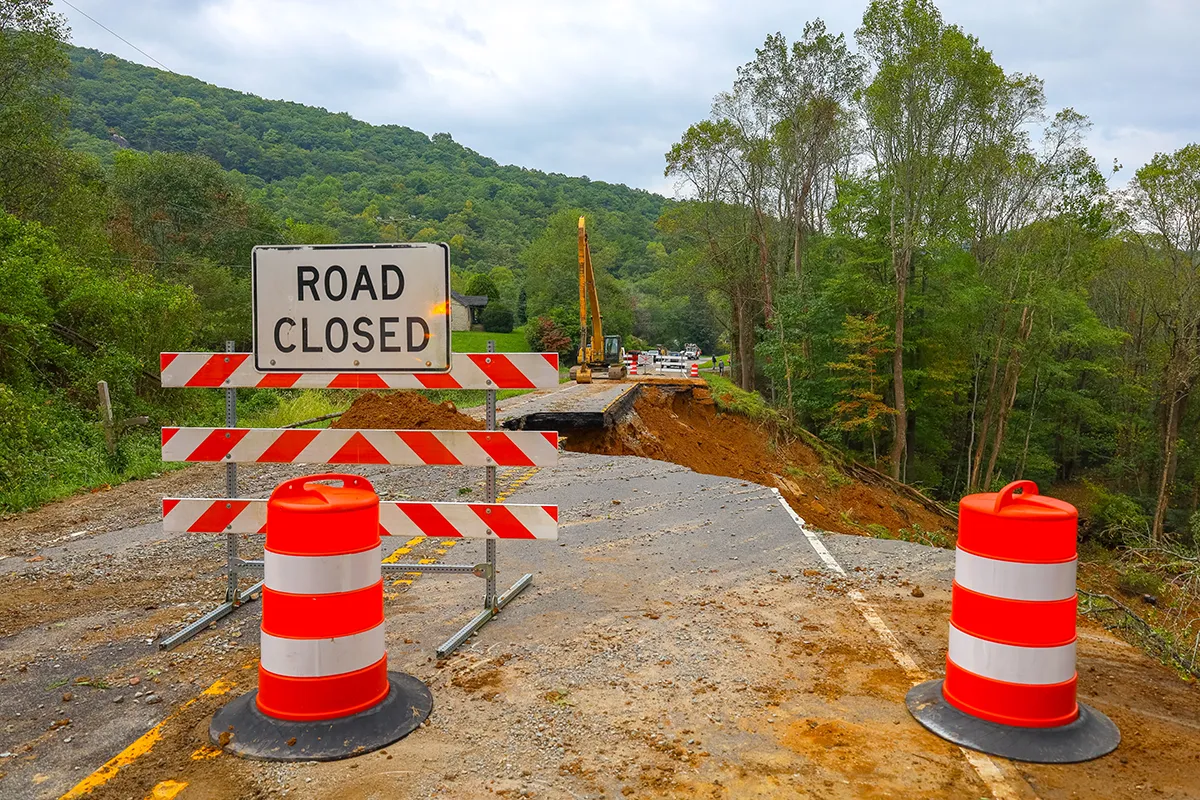
Whitehair-Conde: This project addresses a critical gap in wildfire risk assessment. California has wildfire threat zones that map risk across the state, but what we were interested in was understanding that risk specifically along transportation infrastructure—roads and rails. Transportation infrastructure is critical for emergency services, for people evacuating when there's a fire, and for rebuilding afterward. That data hadn't really been put together in this way yet.
Our model is designed for detecting and outlining wildfire-affected areas from satellite imagery. It uses the I-GUIDE platform for geospatial data, and it was trained on imagery of California paired with CAL FIRE data sets and files from the US Census detailing major roads and railways. Once trained, the model can analyze new images and predict wildfire risk levels at the pixel scale, identifying which roads and rail segments may be at risk.
What makes our approach innovative is that we wanted to make it open source, open science, and readily accessible to other people. We specifically designed it to work on a small dataset and train quickly, because with machine learning and particularly deep learning, it usually takes a very long time to train, and you need large amounts of data. In certain areas, particularly outside of California, that data may not be available, either because those areas do not historically have many wildfires or because they do not have the means to undertake the large project of mapping threat zones. Our solution can be deployed quickly in those areas.
Q: Your team won second place in a competition with this work. What did you enjoy most about this project?
Whitehair-Conde: Coming back to why I joined CNA—I enjoyed working on a diverse team, with people like JJ Huggins and Shaun Williams, who are experts in GIS [geographic information systems] and disaster planning and management. I learned a lot from them. I really like projects that seem like they can have an impact and be usable either in the very near future or immediately. We could put this model out there, and because it's open source and open science, anybody can take it and use it and modify it for their use. It can be put to work immediately. With that road and rail data being very important for emergency services, knowing that this project could be useful is what I really enjoy from my work. Hopefully this will grow into future funded projects. I like knowing that what I work on will have an impact.
Q: How would you describe your personal approach to innovation and anticipating what the government may need?
Whitehair-Conde: I think my approach is two-fold: I'm innately curious about anything and everything, so being able to use that curiosity and read and learn about different topics, and then pull things from one topic and apply it to something completely unrelated, really helps with innovation.
On the flip side, knowing that I tend to be more of a “Jack of all trades, master of none,” I recognize that collaboration is very important to fill those gaps. I try to know where somebody else has expertise that I don't have. If you're able to pull in those different areas of expertise, your solution is going to be sound and work, rather than something off-the-cuff. Being able to combine those different topic areas and have people from different fields suggest different parts of a solution helps to get that innovative result.
Q: How would you describe CNA's approach to innovation?
Whitehair-Conde: It's very collaborative. It's very easy to find somebody at CNA who has expertise in an area who you can reach out to, or who knows somebody that has an area of expertise you can tap into. Nine times out of ten, you can send a message on Teams or an email and say, “Hey, I'm working on this project. I have some questions,” and they're more than willing to chat. Sometimes they have the availability to help and work on a project.
Beyond collaboration, CNA's commitment to internal research projects is huge for innovation. Whether you're somebody who's just been hired or all the way up at the highest levels, if you have an idea and you put together a good proposal for your project, you can get that funded and do that research—not because it's funded by a client, but because it's an innovative or interesting project that CNA sees value in. Some of those projects have gone on to become future client work. CNA's commitment to let things grow from a thought into a funded project is huge to me.
Q: How do you keep up with emerging trends and integrate them into your work?
Whitehair-Conde: Thankfully, that curiosity helps, and I listen to a lot of podcasts, some of which are just more fun and interesting like Ologies, a weekly science podcast hosted by Alie Ward. CNA also has teams and groups and email chains that are just a constant stream of new articles, new proposals, regulations, and other ways to connect. Having access to these lines of information at CNA and being able to read those on my lunch break or whenever makes it very easy to keep up to date.
I also try to keep some calendar time open for project reviews and information meetings from different departments across CNA. Whether it's from within my own department or something like the Center for Emergency Management Operations or other departments, I attend these presentations having no idea what it may be about, but I come out thinking, “Wow, that's really interesting,” or “I really need to know more about this topic. Let me chat with this person.”
Q: What inspires you to approach challenges in new ways?
Whitehair-Conde: I don't think it's a concerted effort on my part to try and be innovative. It's just that curiosity—hearing about what somebody else is working on at CNA and having no idea about the topic, then learning a little bit more and a little bit more. Naturally, you start thinking, “I wonder how this could apply to my project.”
I'm also able to pull from my academic background. I'm working on a project related to radio signals, and there are some modeling and mathematical tools I'm pulling directly from my previous research on predicting aircraft motion with certain parameters in robotics. I'm using those same approaches now for radio signals instead. Being able to take expertise from one area and apply it somewhere completely different is valuable.