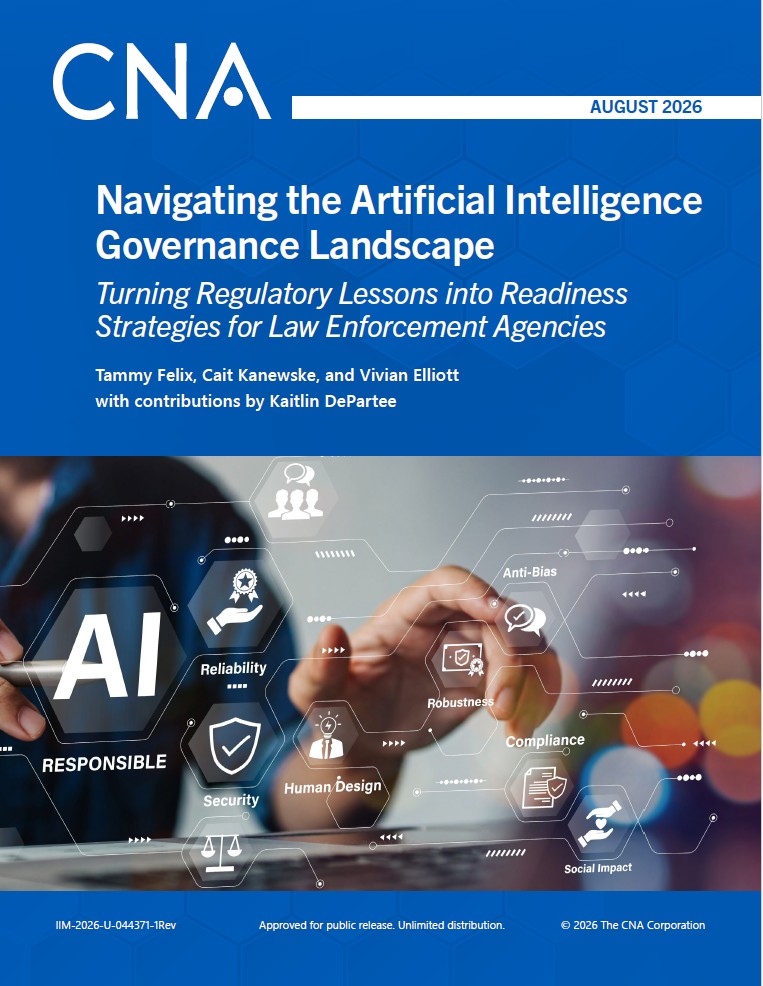
Artificial intelligence (AI) is rapidly reshaping policing, from digital evidence management to officer wellness programs. But this increased efficiency comes with significant operational, administrative, and ethical challenges, specifically regarding transparency, civil rights, and public trust. In response, states are increasingly enacting legislation to regulate how AI is procured, deployed, and monitored.
This paper examines AI policies in California, Texas, Colorado, and Utah, states that were early adopters of governance requirements that directly affect law enforcement. Each state has taken a different approach:
- California has taken a targeted operational approach to AI-assisted police reporting, requiring disclosure, officer attestation, draft retention, audit trails, and limits on how vendors use law enforcement data.
- Texas has emphasized transparency and due process, requiring public disclosure of AI systems, notice to individuals affected by automated decisions, and avenues for human review and appeal.
- Colorado has taken the most restrictive approach, designating high-risk and prohibited uses, requiring annual impact assessments, and establishing explicit boundaries (i.e., redline policies) for systems such as predictive policing and facial recognition.
- Utah has focused on procurement oversight and risk management, mandating data minimization and enhanced vendor accountability before agencies can acquire AI systems.
Together, these state laws provide an early road map for how law enforcement agencies nationwide may be expected to manage AI. They also highlight the range of approaches emerging across jurisdictions, and they underscore the importance of preparing now for a complex and evolving regulatory landscape.
Download reportApproved for public release. Unlimited distribution.
Details
- Pages: 30
- Document Number: IIM-2026-U-044371-Final
- Publication Date: 8/31/2026